Yes, the bottled water business is profitable in India for entrepreneurs who execute it with strong planning, quality focus, efficient operations, and robust distribution networks. The industry benefits from consistent and growing demand driven by urbanization, health awareness, unreliable municipal water supplies in many areas, and a booming hospitality and travel sector. While the initial investment can be substantial and competition is fierce, successful operations deliver attractive gross margins of 40-60% and net profit margins of 15-30%. Many plants recover their investment within 18-36 months and scale into sustainable, high-volume businesses. However, profitability depends heavily on location, scale, compliance, and cost control.
Market Overview and Growth Potential
India ranks among the largest and fastest-growing bottled water markets globally. As of 2025-2026, the market size estimates range from approximately USD 4 billion to over USD 10 billion, depending on the inclusion of packaged drinking water, mineral water, and bulk variants. Projections indicate the market could reach USD 9-30 billion by 2030-2034, with CAGRs commonly estimated between 8% and 14%. This robust growth stems from multiple structural factors.
Rapid urbanization has pushed millions into cities where tap water quality is often inconsistent or perceived as unsafe. Rising middle-class incomes, greater health consciousness post-pandemic, and awareness of water-borne diseases have made packaged water a daily necessity rather than a luxury. The hospitality sector (hotels, restaurants, cafes), tourism, railways, airlines, events, and institutional buyers (schools, offices, hospitals) provide steady bulk demand.
Still water holds over 90% market share, but functional, flavored, alkaline, and mineral-enriched variants are growing faster due to premiumization trends. North India leads in consumption, followed by South and West, but Tier-2 and Tier-3 cities are witnessing faster growth as awareness and distribution expand. Seasonal spikes occur during summers (March-June), festivals, and wedding seasons, sometimes doubling sales volumes.
The industry features a mix of national brands (Bisleri, Kinley, Aquafina), regional players, and thousands of small local manufacturers. While organized players dominate branded retail, the unorganized and semi-organized segments thrive on price competitiveness and hyper-local availability, especially for 20-liter jars. E-commerce, quick commerce, and modern retail have further boosted accessibility.
Government initiatives like Jal Jeevan Mission aim to improve public water supply, but challenges such as last-mile delivery, contamination risks, and groundwater issues continue to support private packaged water demand. Overall, the market offers long-term tailwinds, making it a resilient business even during economic fluctuations.
Types of Bottled Water Businesses in India
Entrepreneurs can choose from several models based on capital and expertise:
- Small-Scale Packaged Drinking Water Plant — Focus on 500ml, 1L, and 20L jars with capacities of 1000-5000 liters per hour (LPH). Suitable for local and regional markets.
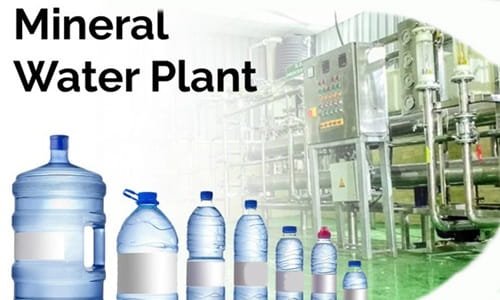
- Mineral Water Plant — Involves additional mineralization processes for premium positioning and higher pricing.
- Distribution and Reselling Model — Lower investment; source from established manufacturers and focus on logistics, marketing, and local supply chains. Ideal for beginners.
- Premium and Functional Water — Alkaline, oxygenated, vitamin-infused, or flavored options targeting urban health-conscious consumers and gyms.
- Bulk and Institutional Supply — Concentrate on 20L jars and large orders for offices and events, offering stable revenue with lower marketing costs.
Most new entrants start with small-to-medium plants and expand by adding SKUs or new plants. Franchise models with established brands also reduce risk for some.
Startup Costs and Investment Breakdown
Setting up a bottled water plant involves significant capital for machinery, treatment systems, compliance, and working capital. Costs vary by location (lower in Tier-2/3 cities), capacity, and automation level.
Table 1: Estimated Startup Costs for Bottled Water Plant (₹ Lakhs, Approximate 2025-2026)
| Component | Small Scale (1000-3000 LPH) | Medium Scale (5000-10000 LPH) | Large Scale |
| Land & Building (Rent/Purchase) | 15-40 | 40-80 | 80-150+ |
| Machinery & Bottling Line | 25-60 | 80-150 | 200-400 |
| Water Treatment (RO, UV, Ozonation) | 8-18 | 20-40 | 50-80 |
| Lab Equipment & Quality Testing | 3-8 | 10-20 | 25-40 |
| Packaging, Labeling & Coding Machines | 5-12 | 15-30 | 40-70 |
| Licenses (FSSAI, BIS, Pollution, Factory) | 2-6 | 5-12 | 10-20 |
| Initial Inventory & Raw Materials | 5-15 | 15-35 | 40-80 |
| Vehicles for Distribution | 4-12 | 15-40 | 50-100 |
| Marketing, Branding & Misc. | 3-10 | 10-25 | 30-60 |
| Total Initial Investment | 70-180 | 210-450 | 500-1000+ |
Smaller setups can begin under ₹1 crore with basic automation, while fully automated medium plants require higher outlays. Government subsidies under MSME, PMEGP, or food processing schemes can reduce effective investment by 15-35%. Working capital for 3-6 months is essential to cover operations until sales stabilize.
Revenue Streams, Profit Margins, and Financial Projections
The business model is volume-driven. Production costs are relatively low after initial setup, primarily involving packaging materials, labor, utilities, and transportation. Key revenue comes from retail bottles, bulk jars, and institutional contracts.
Table 2: Typical Gross Margins by Product Category
| Product | Production Cost (₹ per unit) | Selling Price (₹ per unit) | Gross Margin (%) | Volume Potential |
| 500ml Bottle | 3.5-6.5 | 8-13 | 45-60 | Very High |
| 1L Bottle | 6-11 | 15-22 | 45-55 | High |
| 2L Bottle | 11-17 | 25-38 | 48-60 | Medium |
| 20L Jar | 15-25 | 35-55 | 55-70 | High (Stable) |
| Premium/Alkaline | 12-25 | 30-80 | 50-65 | Growing |
Table 3: Sample Monthly Financial Projection for Medium-Scale Plant (₹)
| Particulars | Conservative Scenario | Optimistic Scenario |
| Monthly Revenue | 15,00,000 | 35,00,000 |
| Cost of Goods Sold (Ingredients, Packaging, etc.) | 7,50,000 | 15,50,000 |
| Gross Profit | 7,50,000 | 19,50,000 |
| Operating Expenses (Salaries, Rent, Utilities, Transport, Marketing, Maintenance) | 4,00,000 | 8,00,000 |
| Net Monthly Profit | 3,50,000 | 11,50,000 |
| Net Profit Margin (%) | 23% | 33% |
A medium plant producing and selling 50,000-1,50,000 bottles/jars daily at 60-70% capacity utilization can generate strong returns. Annual turnover for successful medium operations often ranges from ₹2-8 crores, with net profits of ₹50 lakhs to ₹2+ crores after the first year. Break-even is typically reached in 12-24 months. Factors boosting profitability include bulk raw material purchases, waste minimization, and long-term distributor contracts.
Operational Insights and Success Factors
Success in this business requires more than just good water treatment. Key elements include:
- Location Advantage: Proximity to reliable water sources, good roads for distribution, and proximity to demand centers (cities, highways, tourist spots).
- Quality and Compliance: Regular testing, BIS/FSSAI certification, and transparency build trust. Poor quality can destroy reputation quickly.
- Distribution Network: Tie-ups with kirana stores, supermarkets, hotels, railways, and quick commerce platforms are critical. Many successful plants dedicate 30-40% effort to logistics.
- Branding and Marketing: Local branding, attractive packaging, and digital promotion help differentiate from competitors. Institutional contracts provide stability.
- Cost Control: Efficient machinery, energy-saving practices (solar power), and inventory management significantly impact margins.
- Product Diversification: Adding 20L jars, cups for events, and premium variants reduces dependency on low-margin small bottles.
Skilled technicians for plant maintenance and a motivated sales team are essential. Many owners start by supplying locally and gradually expand.
Major Challenges and Risk Mitigation Strategies
Despite strong demand, the business faces notable challenges:
- Intense Competition and Price Wars: Thousands of players lead to margin pressure, especially in retail bottles.
- Raw Material Volatility: PET bottle prices fluctuate with crude oil and polymer costs, sometimes rising sharply.
- Regulatory Compliance: Strict FSSAI norms, BIS standards, pollution control, and regular audits increase costs for smaller players.
- Environmental and Sustainability Issues: Plastic waste concerns and groundwater extraction regulations are tightening. Shifting to recyclable or reusable packaging is becoming important.
- Seasonality and Logistics: Summer peaks contrast with lean periods; transportation costs in rural areas can be high.
- Water Source Reliability: Over-extraction and quality variations require multiple backups.
- Counterfeiting: Fake products damage brand trust in some markets.
Mitigation involves long-term supplier contracts, investing in sustainable practices, maintaining detailed records, diversifying revenue streams, and building strong relationships with distributors. Insurance for plant and vehicles and contingency funds for regulatory changes are advisable.
Scaling the Business and Future Opportunities
Once profitable, scaling options include opening additional plants, franchising distribution, exporting to neighboring countries, or launching related products like flavored beverages. The rise of premium, functional, and eco-friendly waters creates higher-margin opportunities. Institutional and B2B segments (corporate offices, e-commerce fulfillment) are expanding rapidly. Technology adoption—such as automated bottling lines, IoT for quality monitoring, and route optimization software—improves efficiency.
Sustainability trends favor players adopting biodegradable packaging or refill models. With India’s population, urbanization, and tourism expected to grow, the long-term outlook remains positive for organized and quality-focused operators.
Conclusion
The bottled water business in India offers solid profitability potential backed by structural demand drivers and favorable growth projections. While it demands considerable upfront capital, technical knowledge, and operational discipline, the recurring need for safe drinking water ensures steady cash flow once established. Entrepreneurs who prioritize quality, compliance, efficient distribution, and innovation can build highly successful ventures with strong returns.
Aspiring business owners should conduct a detailed local market study, prepare a professional project report, consult experts for plant setup, and secure necessary approvals before investing. Starting at a manageable scale, focusing relentlessly on consistency, and adapting to consumer and regulatory trends can turn this into a rewarding, scalable enterprise. With proper execution, the bottled water business not only quenches thirst but also builds lasting financial success in one of India’s essential and growing industries.

Meet Suhas Harshe, a financial advisor committed to assisting people and businesses in confidently understanding and managing the complexities of the financial world. Suhas has shared his knowledge on various topics like business, investment strategies, optimizing taxes, and promoting financial well-being through articles in InvestmentDose.com