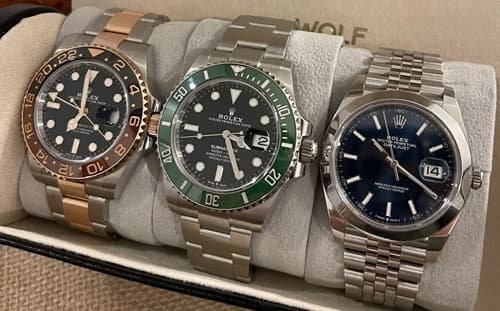
Rolex watches occupy a fascinating position at the intersection of luxury consumption and alternative investment — objects of extraordinary craftsmanship and cultural prestige whose price behaviour in secondary markets has, for specific references over specific periods, produced returns that rival or exceed financial market investments. The idea that a Rolex can be both a pleasure object and an appreciating asset has driven significant collector and investor interest globally and increasingly among affluent Indian consumers. Whether a Rolex watch is a good investment in 2026 requires honest assessment of which specific watches, under what market conditions, and compared to what alternatives — because the variation in investment outcomes across different Rolex references is enormous, and the narrative of universal Rolex appreciation significantly overstates what the secondary market data actually demonstrates across the full range of models.
The Rolex Investment Landscape — Context and Reality
Rolex’s investment narrative was enormously strengthened by the 2020-2022 period — a confluence of COVID-era liquidity, supply chain disruptions to new watch production, and explosive speculative demand that drove secondary market prices for popular Rolex references to extraordinary premiums above retail. A Rolex Daytona with a retail price of approximately ₹12-14 lakh was trading in the grey market at ₹35-50 lakh during peak 2021-2022 speculation. This extraordinary premium created powerful investment mythology that has outlasted the market conditions that produced it.
The subsequent 2022-2024 correction — during which grey market premiums compressed significantly across most Rolex references as supply normalised and speculative demand cooled — has provided a more realistic picture of sustainable Rolex investment returns. Current 2026 market conditions show a more bifurcated picture where specific discontinued references and historically significant models maintain strong premiums while standard production current references trade closer to retail price.
Rolex Watch Investment Key Parameters
| Parameter | Details |
| Investment grade references | Daytona 116500LN, GMT Master II Pepsi, Submariner, Day-Date |
| Entry price for investment-grade references | ₹10 lakh–50 lakh+ depending on reference |
| Grey market premium — peak 2021-2022 | 100–200% above retail for popular references |
| Grey market premium — 2026 | 10–40% above retail for most references |
| Historical 10-year appreciation — select references | 8–15% CAGR for strongest performing references |
| Liquidity | Moderate — reputable watch dealers and auction houses |
| Storage cost | Minimal — secure storage |
| Insurance cost | Approximately 0.5–1% of value annually |
| Maintenance | Service every 5-10 years — ₹30,000–80,000 cost |
| Authentication risk | Significant — replica market is sophisticated |
| Import duty in India | 38.5% — major cost factor for new imports |
| Capital gains tax | Added to income at applicable slab rate |
| Income generation | None — appreciation only |
| Market for resale in India | Growing — Chrono24, auction houses, specialist dealers |
Which Rolex Watches Have Demonstrated Investment Returns
The investment performance of Rolex watches is highly reference-specific — a few models have demonstrated consistent long-term appreciation while the majority of the production range has not generated meaningful investment returns above general inflation.
The Rolex Daytona — particularly stainless steel versions with ceramic bezels — has demonstrated the most consistent strong secondary market performance over 10-15 year holding periods, driven by its legendary motorsport association, limited production volumes, and waitlists at authorised dealers that have historically extended to years. Discontinued references with specific dial variations — Paul Newman Daytona vintage examples — have appreciated extraordinarily but require specialist knowledge and significant capital.
The GMT Master II in Pepsi and Batman configurations, the Submariner Date in green and black ceramic, and the Day-Date in precious metal have all shown positive long-term appreciation trajectories for buy-and-hold investors who acquired at or near retail prices through authorised dealer relationships.
Standard three-hand date references — the Datejust and Oyster Perpetual production volumes — have generally not performed as investment assets beyond modest appreciation that may not significantly exceed inflation after accounting for transaction costs and insurance.
Rolex as Investment vs Alternative Uses of Capital
| Parameter | Rolex Watch | Equity Mutual Fund | Gold ETF | Real Estate |
| Historical 10-year returns | 8–15% CAGR (best references) | 12–15% CAGR | 9–11% CAGR | 5–8% CAGR |
| Income generation | None | Capital gains | None | Rental yield |
| Liquidity | Moderate — dealer dependent | Very high | Very high | Very low |
| Authentication risk | Significant replica risk | None | None | Title risk |
| Minimum investment | ₹10 lakh+ for investment grade | ₹500/month | ₹600–700/unit | ₹25 lakh+ |
| Storage and insurance | Required — ongoing cost | None | None | Maintenance required |
| Enjoyment value | High — wearable asset | None | None | Habitation value |
| Market transparency | Limited — dealer networks | Complete — NAV published | Complete — exchange price | Low |
| Tax treatment India | Income tax slab rate | LTCG 12.5% | LTCG 12.5% | LTCG 12.5% |
A Rolex watch is a reasonable investment proposition for affluent buyers who specifically want to own and wear a prestigious timepiece — where the consumption enjoyment of wearing the watch justifies the purchase independently, and any investment appreciation is a bonus rather than the primary motivation. For buyers motivated primarily by investment return, the combination of high entry price, authentication risk, moderate liquidity, opaque pricing, and ongoing insurance and maintenance costs makes Rolex inferior to equity mutual funds and gold ETFs on pure investment return efficiency. The watches that generate the strongest investment returns — discontinued references with strong collector demand — typically require specialist market knowledge and established authorised dealer relationships that make them inaccessible to casual investors without deep market immersion.
Meet Suhas Harshe, a financial advisor committed to assisting people and businesses in confidently understanding and managing the complexities of the financial world. Suhas has shared his knowledge on various topics like business, investment strategies, optimizing taxes, and promoting financial well-being through articles in InvestmentDose.com